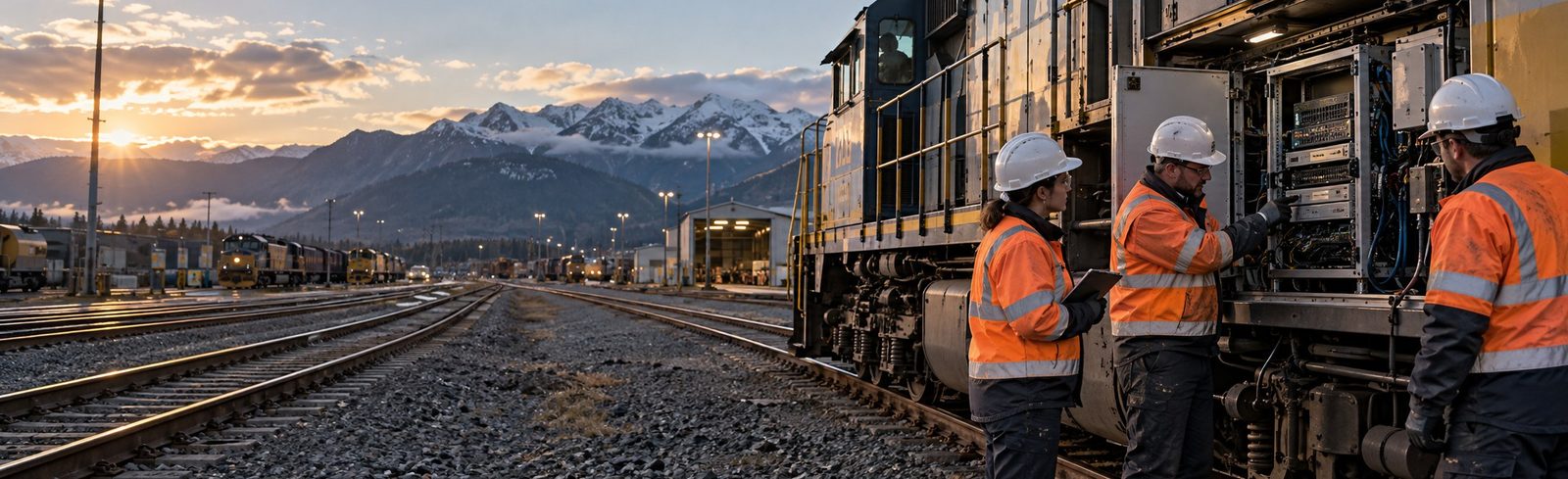
An autonomous rail company retrofits locomotives with AI, and it needed to process camera data on board in rugged conditions. So Weaver selected a ruggedized Dell PowerEdge XR12 server for locomotive edge AI. The project moved from kickoff to a working prototype in 1 to 3 months.
The challenge: autonomy where visibility is limited
The company retrofits existing locomotives with next-generation autonomous features. Its systems combine artificial intelligence with human-in-the-loop controls. The aim is to improve safety, reduce human error and give crews better situational awareness.
The goal was up to SAE Level 4 autonomy in yard and industrial settings where visibility is limited. However, the existing system relied heavily on human oversight. So the company needed AI that could process camera data in real time, on board, in rugged rail conditions.
Our approach: fit locomotive edge AI to the environment
Weaver partnered with the company and its solution providers to build a resilient edge solution for the locomotive. A standard server would not do. Instead, the project called for a ruggedized proof-of-concept server matched to the company’s AI software and camera systems.
First, we scoped the edge design together. Next, we selected the Dell PowerEdge XR12 to fit both the environment and the AI workload. Then we worked closely with the company to integrate it with onboard systems while addressing the physical limits of a working locomotive.
What Weaver delivered
- Dell PowerEdge XR12. We supplied a ruggedized server with edge capabilities, built to run AI vision workloads in rail conditions.
- Hardware and software alignment. We matched the server to the company’s machine learning software and camera systems.
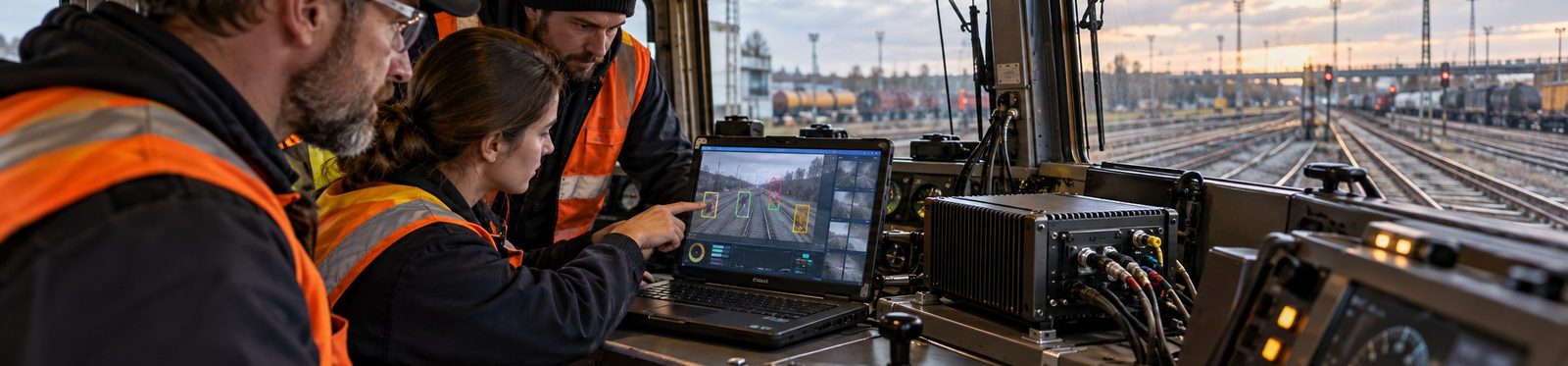
- Real-time hazard detection. Paired with the company’s software, the system identifies track hazards and optimizes autonomous train behavior.
- Deployment support. We supported deployment to validate performance in the test environment.
Results: early testing confirms the locomotive edge AI platform
The project moved from kickoff to a functional prototype in 1 to 3 months. Early testing shows the Dell PowerEdge XR12 platform supports AI vision hazard detection. As a result, autonomous response and safety both improved.
The locomotive edge AI design is also rugged and scalable. That positions the company to expand deployment after validation. In short, Weaver helped turn an ambitious idea for safer autonomous rail into a practical solution.
“This project was about more than technology. It was about helping the client bring their vision for safer, smarter rail operations to life. The Dell PowerEdge XR12 was the perfect fit to make that happen.”
Sarah Wassef, Account Executive, Weaver Technologies
Why industrial AI needs hardware built for the edge
AI workloads increasingly need to run where the work happens, not in a data center. Still, harsh conditions and tight space often rule out standard servers. For that reason, choosing hardware built for the environment matters as much as the software it runs. Rugged edge servers from Dell, such as the PowerEdge XR12, give teams a way to test locomotive edge AI and similar workloads in the field before they scale.
Taking AI to the edge?
Weaver can help you choose and validate edge hardware that fits your environment before you scale. Talk with our team, or browse more case studies.