A rural community hospital in West Texas runs its Meditech hospital information system on a constant internet connection. It had no second path. So Weaver set up a hospital Starlink backup, reworked network routing and proved failover with a 12-hour test of 400 users.
The challenge: critical hospital systems with no backup connection
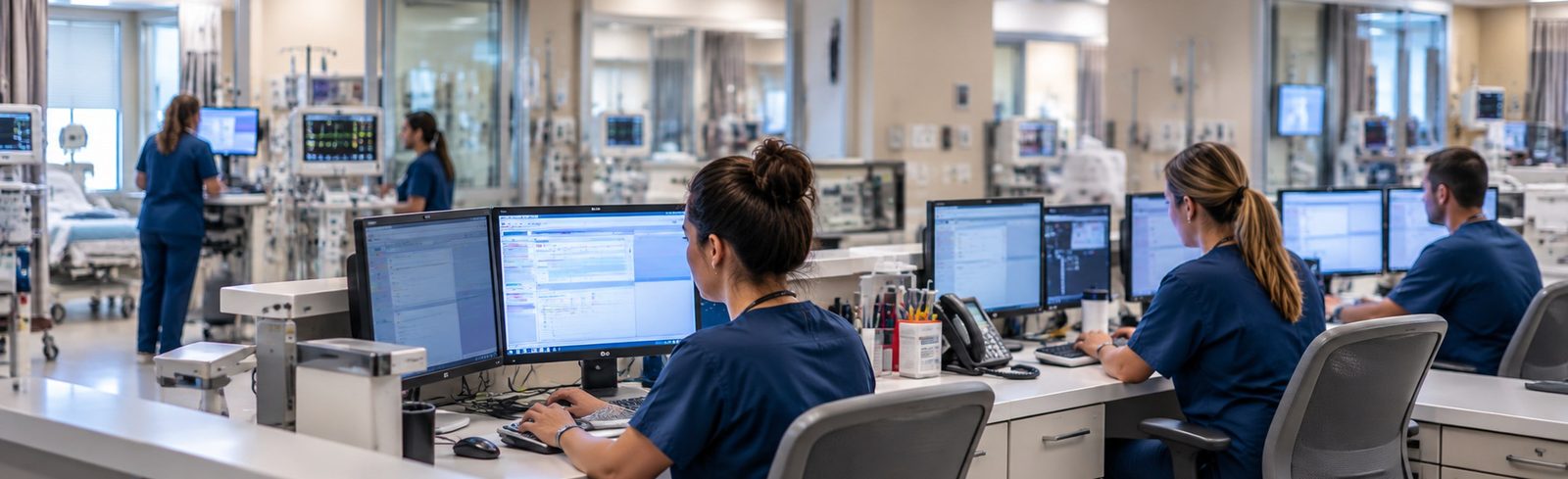
The hospital is a rural community hospital in West Texas. It provides critical healthcare services to its local community. Its Meditech hospital information system depends on a constant internet connection.
However, the hospital had no backup internet path. If the primary connection failed, critical healthcare operations could lose access to the system. So the hospital needed continuous connectivity, even during an outage. It engaged Weaver and Meditech support to explore options. One of those options was Starlink satellite internet as a backup connection.
Our approach to a hospital Starlink backup
The hospital brought Weaver in to work on the network routing changes that reliable failover requires. Our approach was simple: plan it, build it, then prove it. We also brought extensive experience with network services and IT infrastructure to the project.
First, we held a series of team calls with the hospital and Tegria (Meditech). Together, we scoped the backup connection, the routing and firewall changes, and a testing plan. Next, our team built the hospital Starlink backup. Finally, we tested the design before the hospital had to rely on it. The whole project took about two to three months.
What Weaver delivered
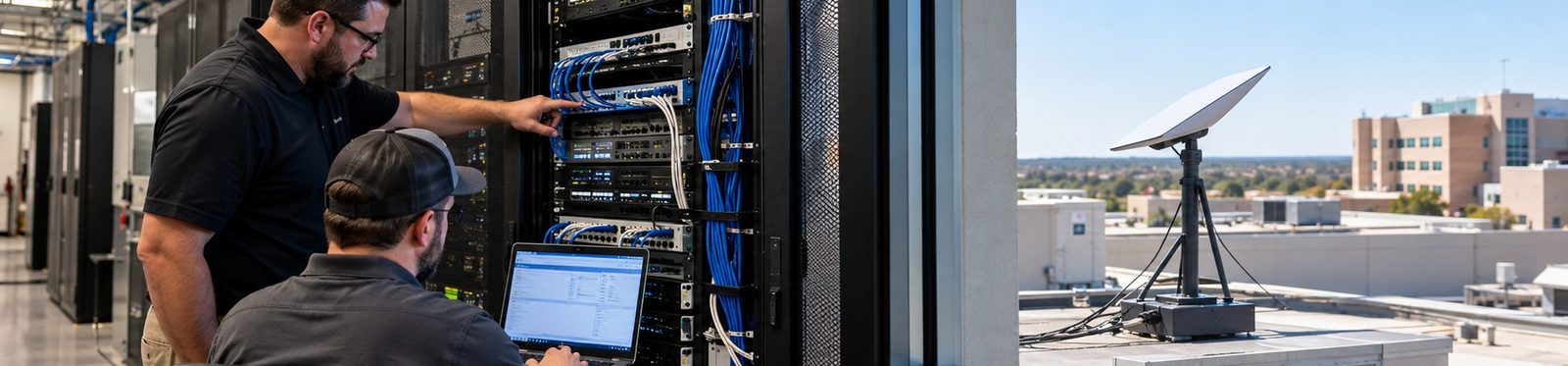
- Starlink backup ISP. We set up satellite internet as a secondary connection for the hospital’s critical systems.
- Fiber installation. We ran new fiber to support the backup connection.
- Firewalls and routing. We configured firewalls and changed routing, so traffic fails over correctly.
- Extensive failover testing. We ran a 2-hour test and a 12-hour test with 400 users.
- Close collaboration. We worked alongside the hospital and Tegria (Meditech) at every step.
Results: a hospital Starlink backup proven under real load
Today, the hospital has a reliable backup ISP. As a result, critical hospital operations stay connected if the primary internet connection fails. Both failover tests ran without glitches or latency issues.
The 12-hour test with 400 users gave the hospital real confidence in the design. In addition, this hospital Starlink backup can serve as a model for other hospitals and public entities that want the same reliability.
A common challenge in rural healthcare
Rural hospitals often have fewer options for a second internet connection. Still, their clinical systems depend on staying online. A backup path, correct routing and real failover testing turn a single point of failure into a planned, proven design. Satellite service from Starlink gave this hospital that second path.
Is your internet backup proven?
Weaver can review your connectivity and routing and help you plan and test a backup that fits your hospital. Talk with our team, or browse more case studies.